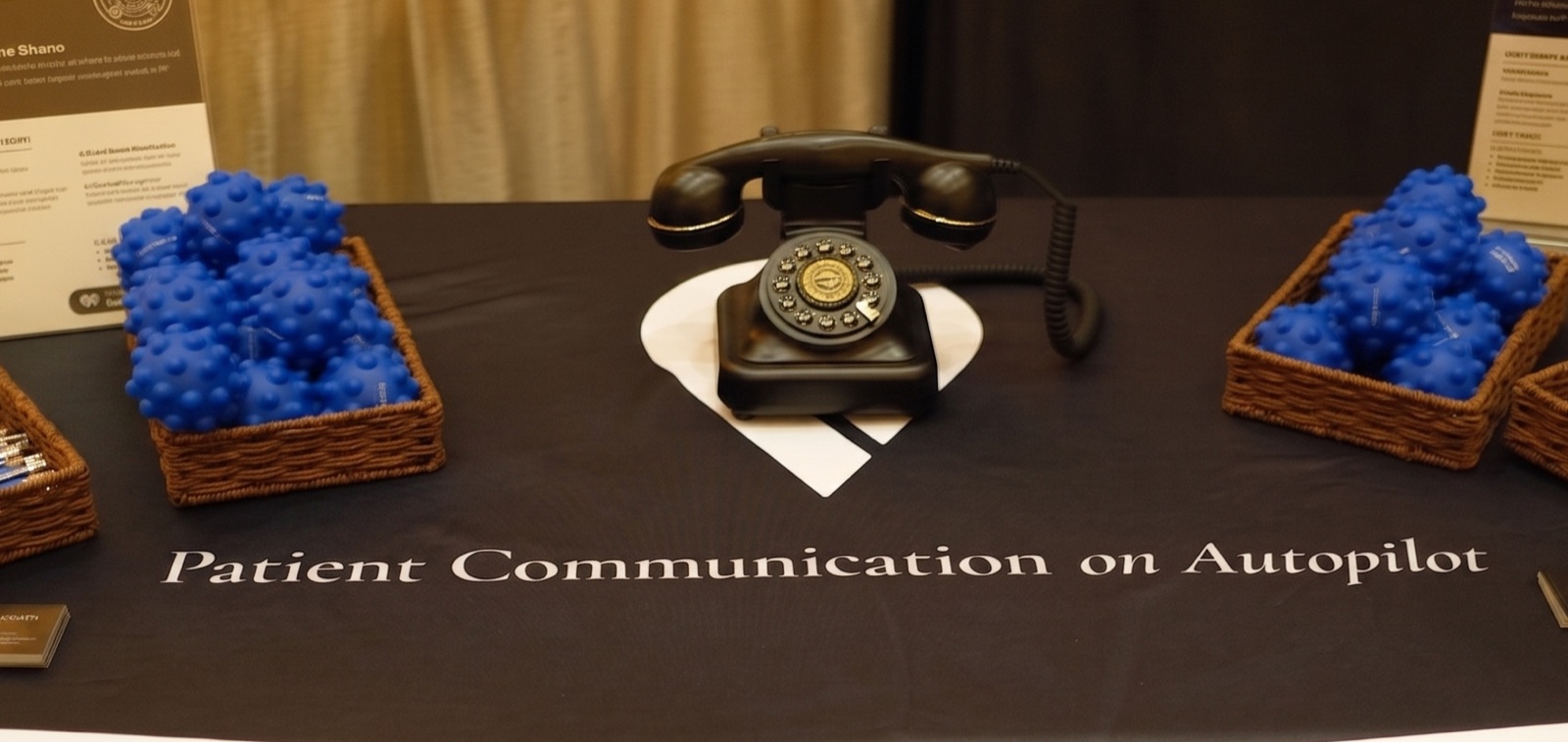
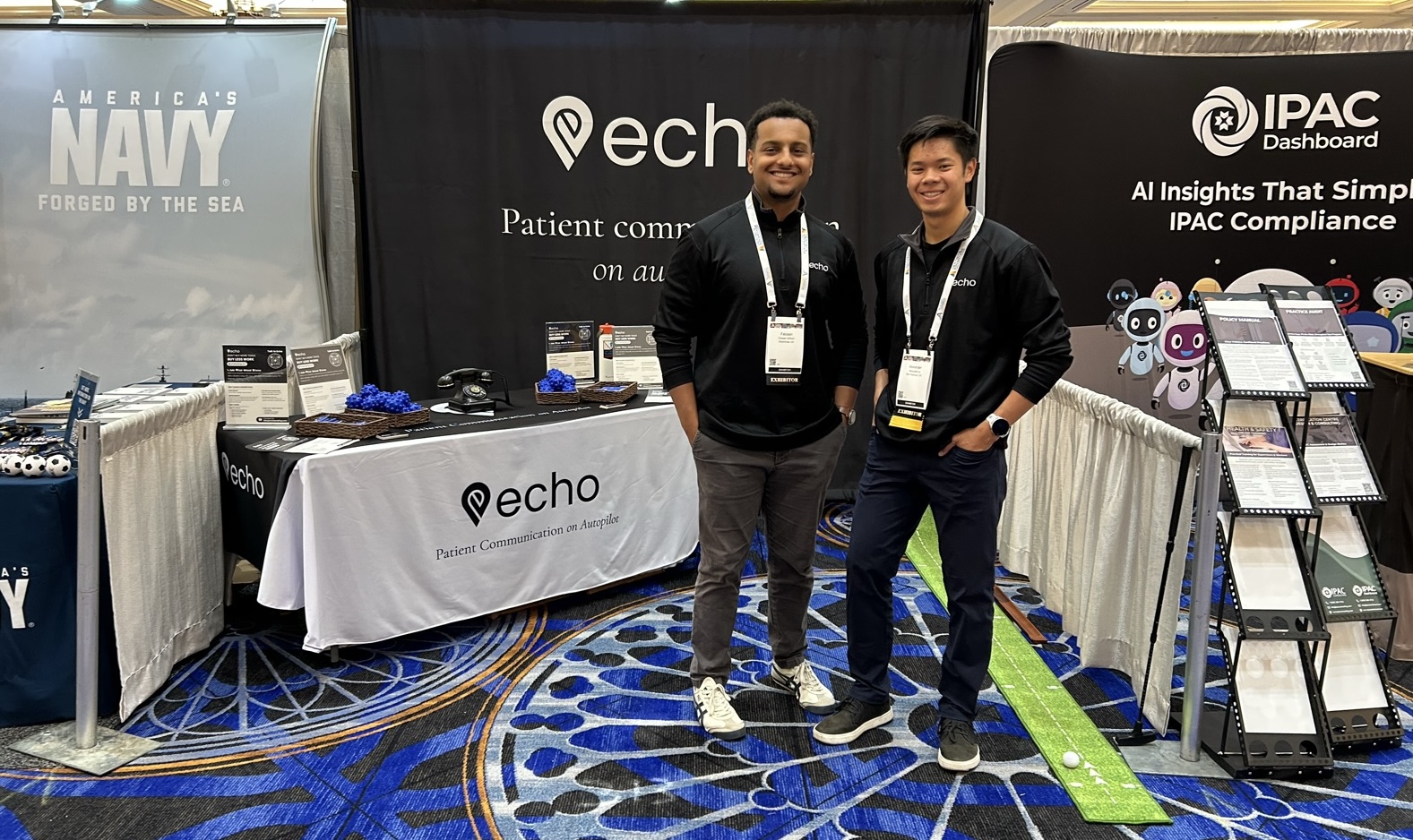
Setting up a booth at AGD 2026 felt a little surreal. We lugged our gear through the lobby of Caesars Palace, past rows of slot machines blinking and chiming, past people who had clearly been up all night. We set up our booth, and then we waited. The start was slow, but by the end, we had a line of people waiting to hear Echo talk. People were curious, and they wanted to see what Echo could do.
The rotary phone
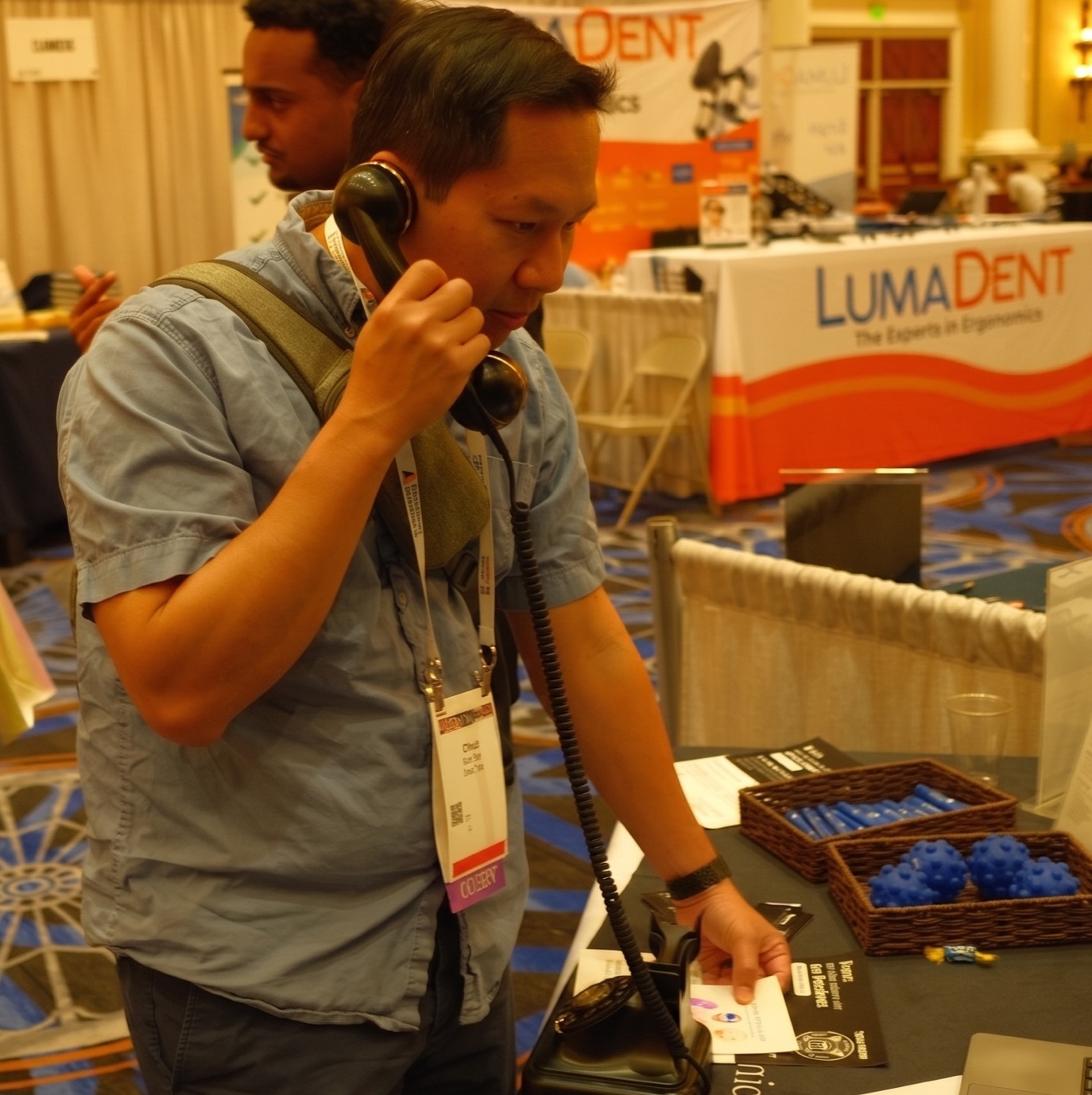
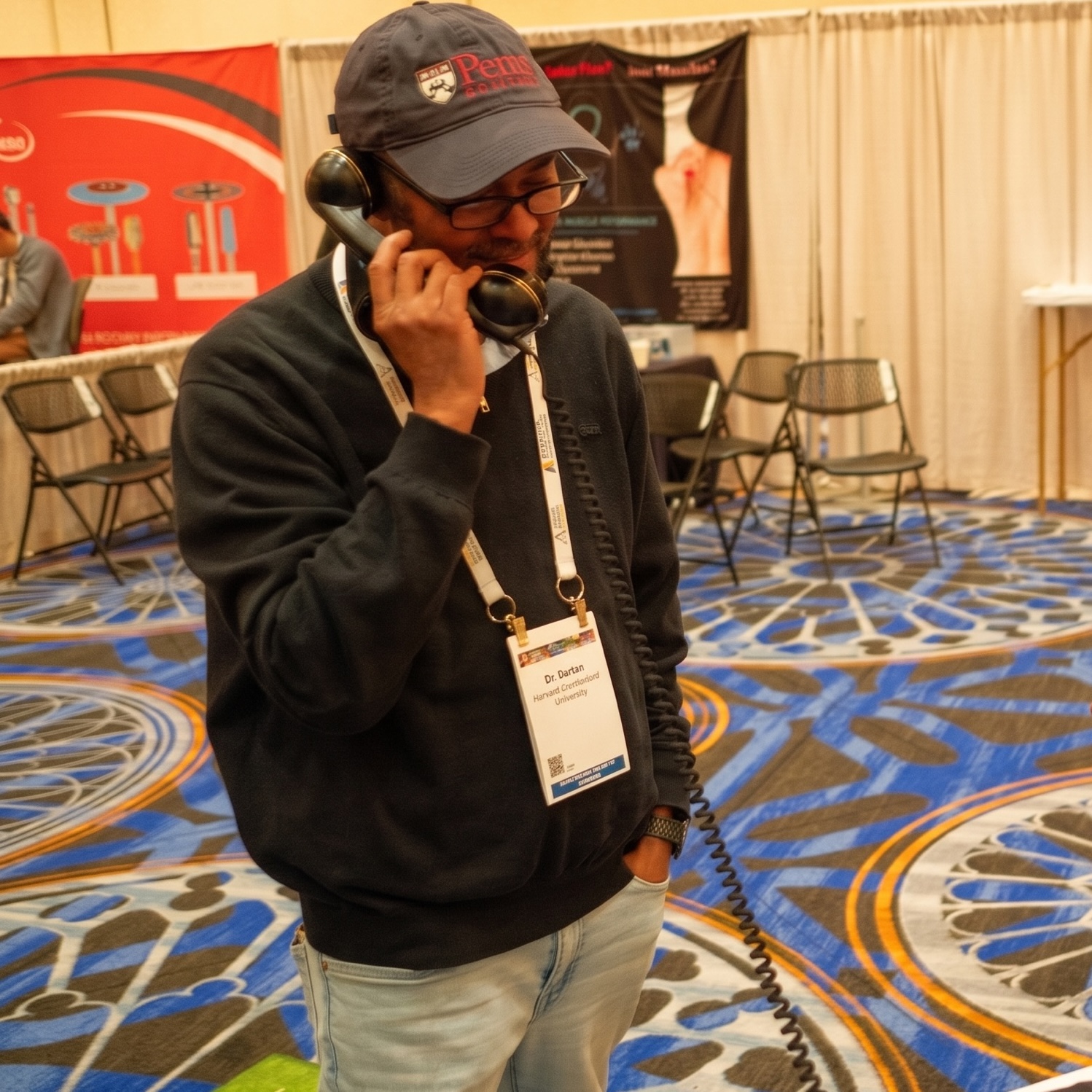
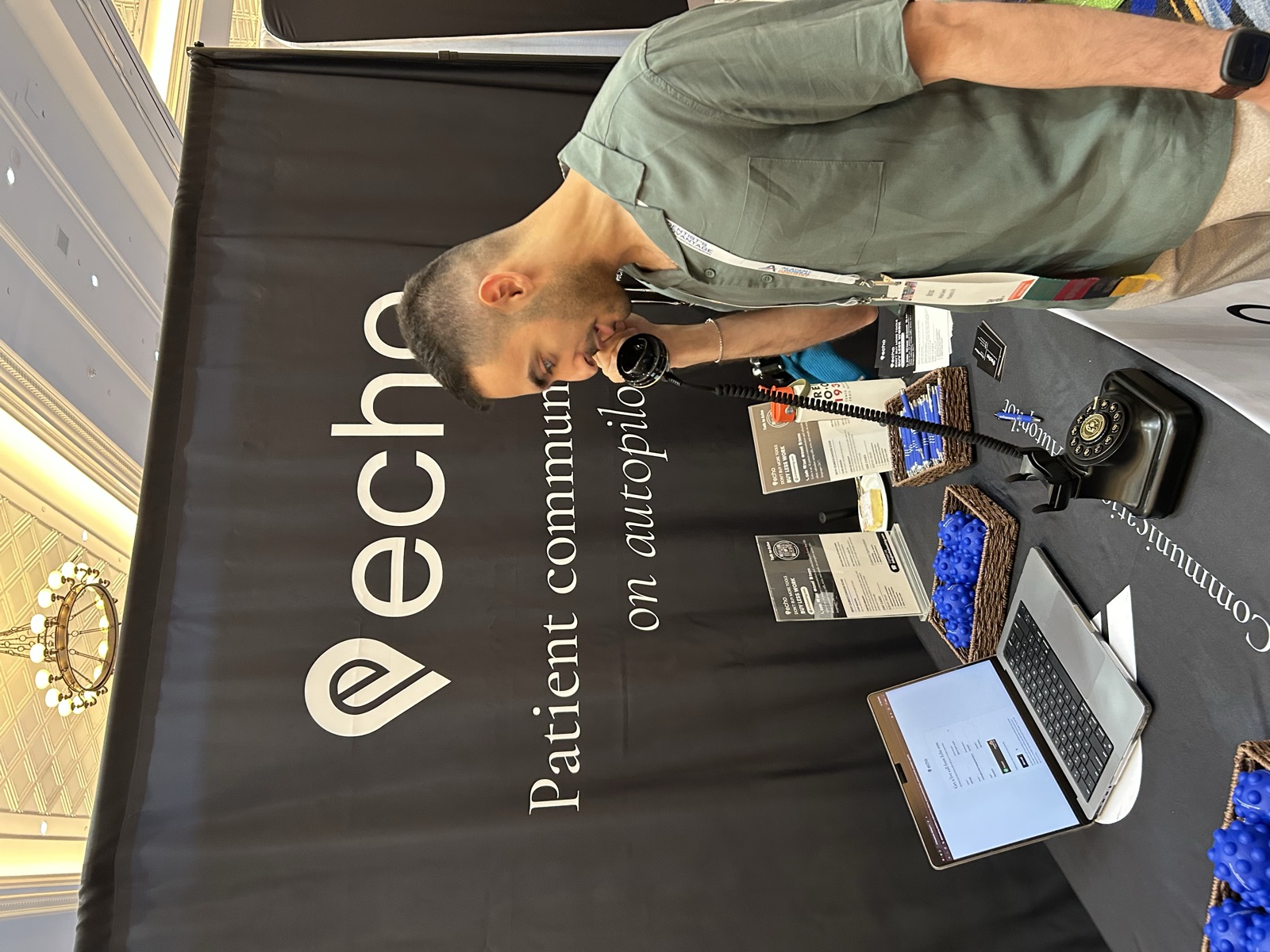
We set an old rotary phone on the table, the kind most of the room grew up dialing, and wired it to Echo. You picked up the receiver, spun the dial, and Echo answered, asked how it could help, and booked a visit while you stood there. The oldest interface in the building, running the newest AI. People laughed. It brought back memories, and they were surprised it actually worked.
That is the whole point of Echo, really. It lives inside the legacy software a practice already runs and still makes the patient side feel easy.
The conversations
What made the days worth it were the conversations. We sat with practicing dentists from all over the country, and a few from much farther: Switzerland, India, the UK. People who had flown across the world and still wanted to stand at a booth and talk shop. We got into the real pain points. The front desk drowning at eight in the morning. The calls that roll to voicemail because there are only so many hands. The patients who never call back and quietly fall off the schedule. These were not theoretical problems to the people in front of us.
The moment that landed hardest
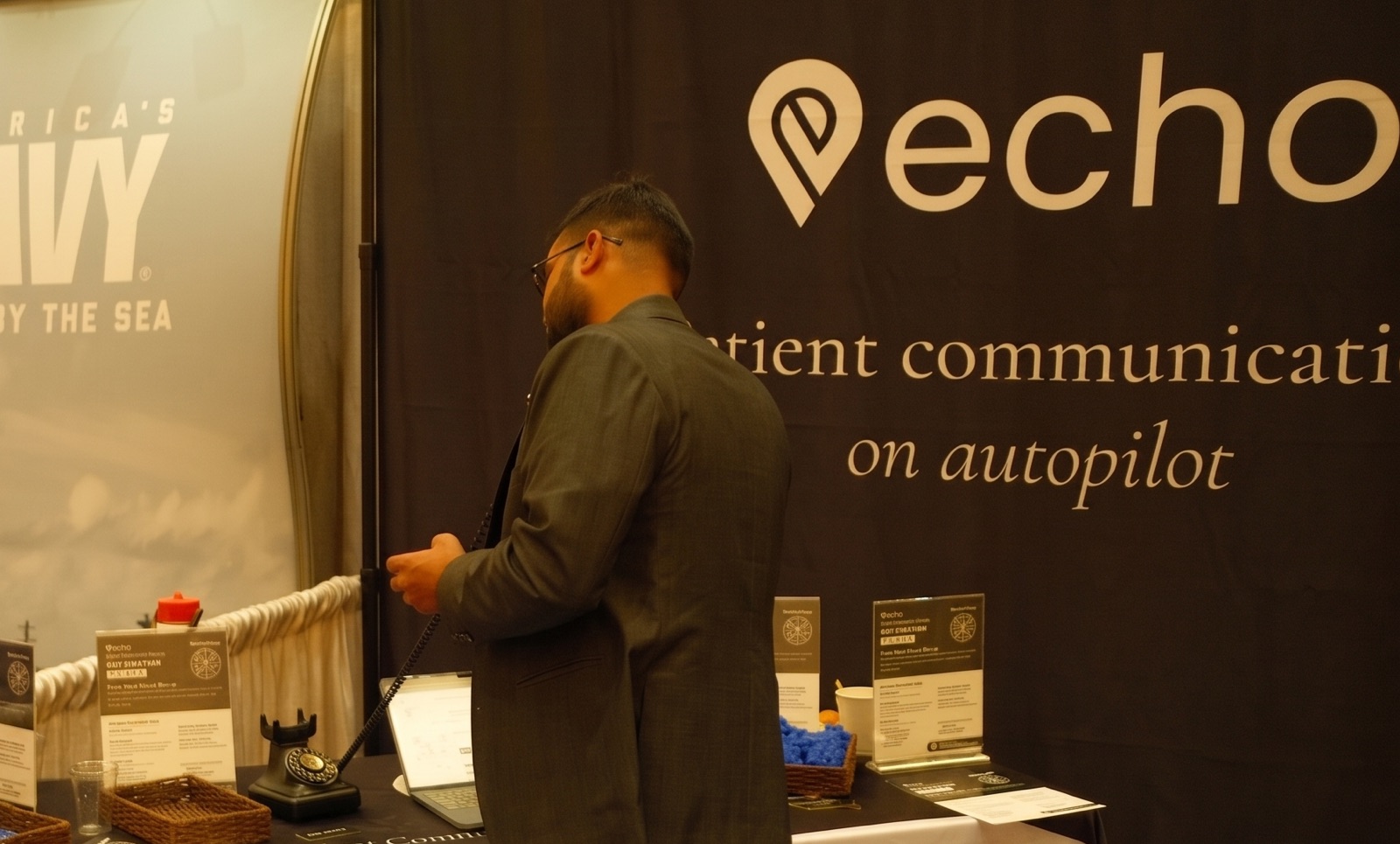
Someone walked up, half-testing us, and spoke to Echo in Egyptian Arabic. Echo answered back in flawless Egyptian Arabic and put a smile on their face. Then someone tried Hindi. Then Russian. No phone menu, no "press two for," no hold music. They just spoke in their own language and were met in it. You could watch the expression change on their faces. For a lot of people, that was the first time AI voice stopped being a gimmick and started being something their patients could actually use.
Don't buy more tools, buy less work
Mostly the week was an education, running in both directions. A lot of people do not know what AI voice can do now, and a lot of the ones who think they do are working off a bad experience. We heard the same story more than once. A practice tried an AI tool, it dropped the wrong appointment into the wrong slot, the front desk stopped trusting it, and everyone went back to doing the work by hand, now with cleanup on top. That is the opposite of the deal. AI should take work off your front desk, not pile more onto it. If a tool creates a list of tasks and you are double-checking every booking to ensure that the AI did its job, you bought more work, not less. Echo is built to do the work for you, and to do it right.
My favorite part of the conference
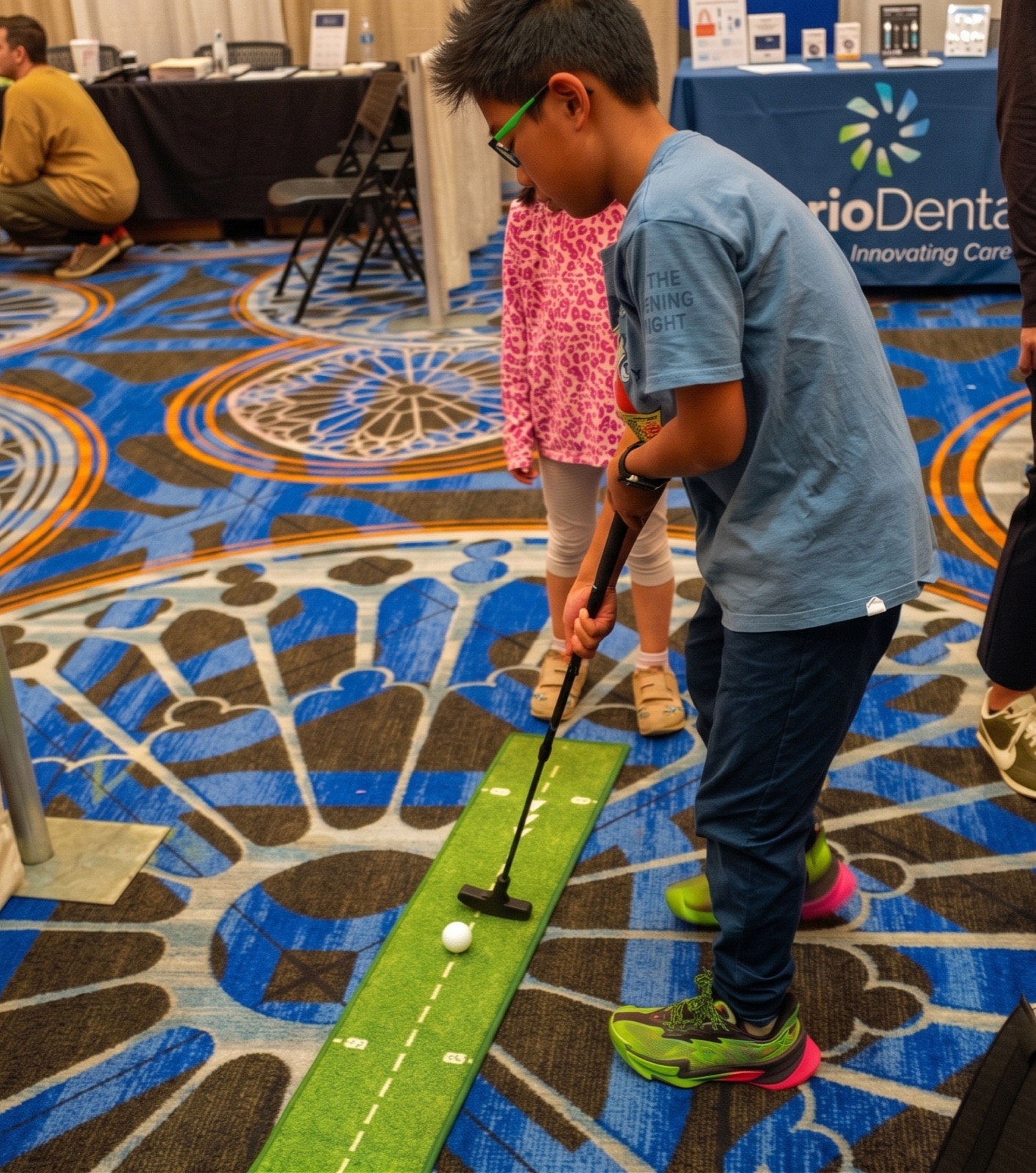
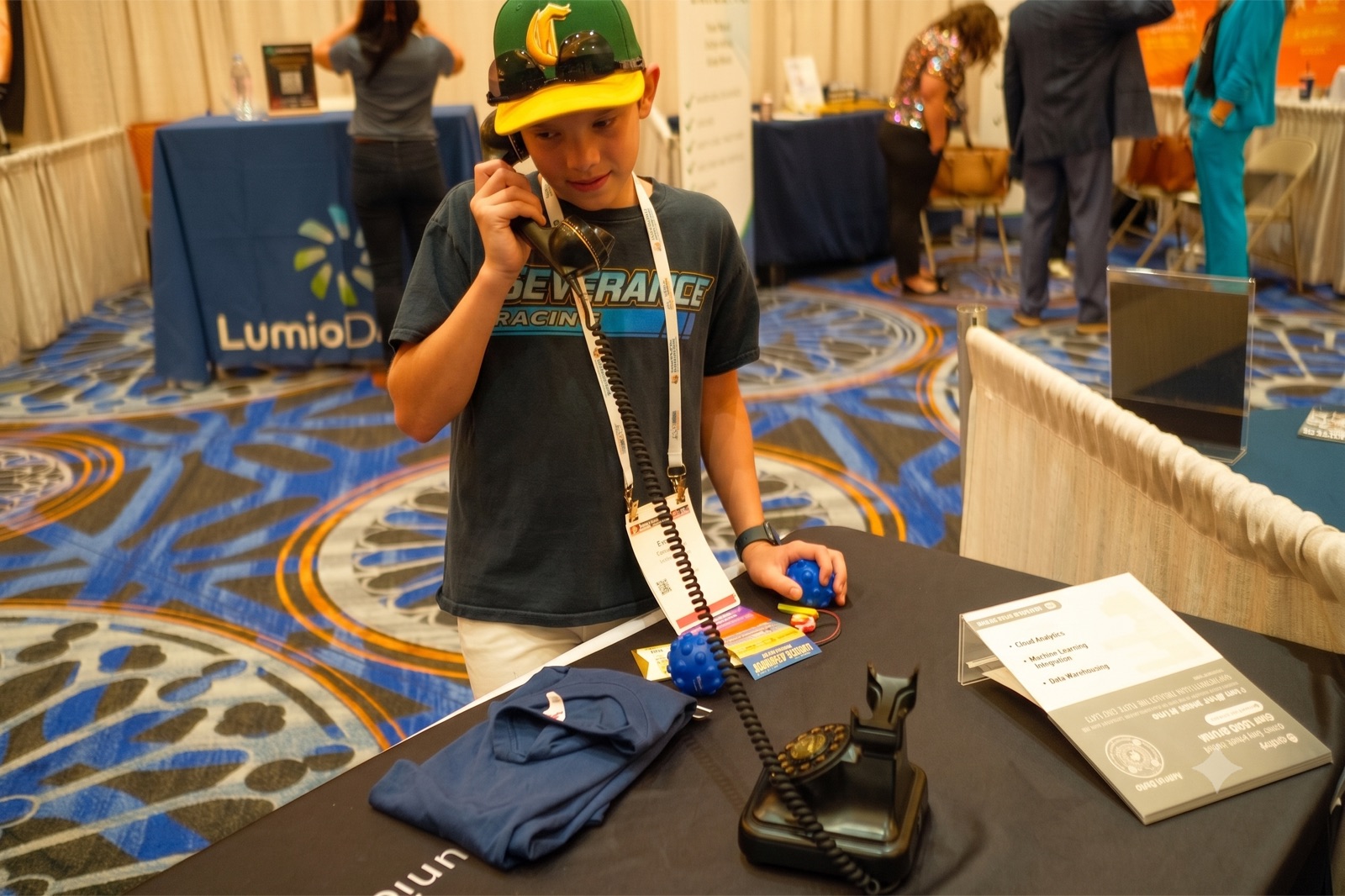
Out of all the people we met, my favorite person was a 7th grader named Emmett. We had a small putting green at the booth, and he spent hours on it across all three days. He had a better stroke than any of us. He also turned out to be our best salesman. He pulled dentists over, got them curious, talked to Echo on the rotary phone himself, and kept the booth full of life. He was a little shy at first, but he got into it, and by the end of the show he was running the whole thing and even bringing his dad over to meet us. We were all impressed, and we are still talking about him.
The questions we kept getting
The most common question came up again and again: "Can it book directly into our practice management system?" Yes, of course. Every appointment Echo books is written directly into your practice management system, including Open Dental, Dentrix, and other platforms. It lands in the right patient's chart, in the right time slot, automatically.
The other one was some version of "what makes you different?". Echo is optimized to provide the best patient experience where it seamlessly speaks in 70+ languages and contains a unified memory of a patient. Echo is one agent that operates across four channels. If a patient texted you last month and emailed a paperless form last week, Echo remembers, so when they call today it greets them by name, in their preferred language and references past interactions. Most setups treat the phone, the inbox, and the text line like strangers. We treat them as one conversation with one patient.
We also met owners who had been bouncing between AI vendors, and sometimes between EMR and PMS systems, switching every time the last one let them down. So we built Echo to bend around the practice instead of the other way around. You decide how it talks, what it handles, and which underlying model it runs on. No third party telling you how to run your own front desk. Full control.
The founders we met
Not everyone at the show was a dentist. We met another company that had recently gone through Y Combinator, and they asked us a simple question: "How did you pay for the conference, the booth, and travel?"
We hadn't really thought about it before, but the answer surprised even us. We paid for all of it with revenue.
That moment made us realize how far Echo has come. We've grown the company without outside funding, and every dollar we've invested back into the business has come from the practices we serve.
We're proud of that. More importantly, it's a reminder that we're building something people genuinely want and are willing to pay for. The best validation isn't funding. It's customers who find enough value in Echo to make growth possible.
We also met a recent YC alum who pitched us his browser automation tool, and that conversation stuck with us. The idea is letting software work inside an interface the way a person does, clicking through the actual screens. For Echo, that is a genuinely interesting path into the EMRs that were never built to be talked to: operating the system like a human at the keyboard instead of waiting on an API that may never come.
The honest part
There are a lot of smart people building healthcare AI right now, and the booths around us advertised beautiful case studies and testimonials. Out of curiosity, we called a few of them from the show floor. Every one went to voicemail. That is the gap, and it is not the technology. The capability is real and it is everywhere. What is rare is the implementation. Answering the phone. Owners actually willing to adopt the technology. Standing behind the result and making it work in a real practice. That is where trust gets built, and it is the only place results actually live.
Why we do this
We want to increase patient access. Every schedule is full on Monday morning, and by Friday no-shows and cancellations have punched holes in it, and each hole is a patient who could have been seen and was not. Echo works in the background to fill those gaps and to reach the people sitting on your recall list, so care reaches patients faster without your team living on the phone to make it happen.
We walked back out through the slot machines at the end of it, tired and a little amazed at how many real conversations we got to have. Thank you to everyone who picked up the rotary phone, and to Emmett for the golf lesson. We are looking forward to talking with everyone who booked a demo, and if you did not get the chance and want to hear Echo answer a call of your own, book a 15-minute demo. No rotary phone required.
The Echo Team writes about AI front desk operations for healthcare practices, drawing on Echo's work answering calls, texts, emails, and forms for clinics across 18+ specialties. Echo Health Solutions was co-founded by Alex Le, a former Amazon Alexa software engineer who studied computational biology, and Faizaan Vidhani, a former IoT software engineer who studied neuroscience and computer science. Learn more about Echo.